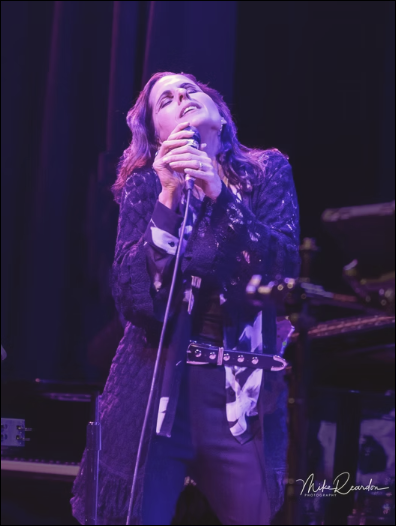
I've had the privilege of working with Smooth Operator three times now, and somehow this group manages to get better every single time. Stacked with incredible talent, show-stopping stage presence, and breathtaking instrument tones throughout.
I don't believe I've ever heard a more impressive flute player than the one in this band. And the young lady who steps into Sade's role is an unbelievable vocalist — her control is exceptional, and she manages to capture the smooth, breathy vocal style of the original in a way that few tribute singers ever do. The most remarkable thing about this band is that they are as incredible as people as they are musicians.
For this show I ran dual stage valve preamp models with Optotronik compression on each vocalist, then sent them to a vocal group for processing. The centerpiece was an SMR Plate reverb with 50ms pre-delay and a 2-second decay time, EQ'd to let the dry vocal breathe — sent exclusively to the surround speakers so the audience felt wrapped in the sound. Sitting out in the house with that reverb processing felt absolutely incredible. A stereo tap delay in time with each song and subtle ADT doubling on Sade's vocals rounded out the vocal chain.
Drums ran through a room reverb with overheads sent to the surround speakers. Keys had reduced stereo width and were also routed to the surrounds for spatial isolation. Each woodwind — sax, flute, and wind controller — had inserted reverb to capture that iconic wet Sade woodwind sound.
Smooth Operator is one of the finest tribute acts I've had the pleasure of working with. Three shows in and I'd do it a hundred more times.
Band
Ticket To Ride — Beatles Tribute
I've worked with Ticket To Ride a couple of times now and it's easy to say they're my favorite Beatles tribute band around. This group has clearly put serious work into recreating the full Beatles experience — from the outfits and hair to the accents and singing voices — and they nail it every time. The most accurate Beatles vocal reproduction I've heard from any tribute act so far.
Beyond the sonic accuracy, they do a remarkable job capturing the fun, playful banter the Beatles were known for between songs. It makes the whole show feel like an event rather than just a performance. Great guys, great talent, great showmanship all around.
Mix-wise I ran preamp models across every input — dual stage valve preamp on vocals and drums, tube stage preamp on guitars and keys. The bass guitarist brings in an authentic Höfner bass which already carries some good high mids naturally, so I kept the EQ minimal and added subtle Compstortion to complement what was already there. Drums all ran to a subgroup for heavy compression using the Mighty Compressor — consistent 10 dB of compression with fast attack and ultra slow release, parallel compressed to keep it sounding natural and powerful underneath.
Ticket To Ride is exactly the kind of band that makes you forget you're watching a tribute act.
Band
Music By Eras feat. Jesse Ray Smith & Whitney Shay
Led by powerhouse vocalists Jesse Ray Smith and Whitney Shay, Music By Eras comes in with an energy that has the whole house on their feet by the end of the first couple of songs. Touring level talent on a local stage.
From a musician's standpoint, every member of this band knows exactly what their role is in the song. What impressed me most was how tastefully they control their dynamics depending on the moment — swelling when the song calls for it, pulling back when it doesn't. Most of the audience will miss the keyboard player's subtle fills threading through the arrangement, but they're there, holding everything together in the best possible way. The drummer and bassist have a strong pocket together, and the acoustic guitar player has exceptional feel throughout.
Mix-wise I ran dual stage valve preamp models with Optotronik compression on each vocalist for saturation and glue. Guitars got a slight push through the tube stage preamp model for harmonic warmth. For drums I used the Mighty Compressor to smash the drum bus and blended it underneath the dry signal — just enough parallel crush to give it power without losing the natural feel. Overheads were pushed to the surround speakers with a medium room reverb, which gave the whole kit a pretty Nashville sound that suited the band perfectly.
Music By Eras is exactly the kind of band that makes the Bornemann feel like a real concert venue. Would mix this show every weekend.
Band
By George — George Harrison Tribute
This is my second time working with By George and I believe both outings have sold out the Bornemann Theatre. What's most impressive is that both times they have absolutely pulled out all the stops — a real sitar, tabla drums, and a full live video production team. Every time they step on stage they're having the time of their lives while taking the audience through the creative life of George Harrison.
I'll admit I've learned a lot about the forgotten Beatle through By George, and I've grown to genuinely love music I never considered myself a fan of until I heard it performed by this group. I suppose that's exactly the reason tribute bands exist.
For this show I ran all inputs with dual stage valve preamp for that iconic vintage saturation. All vocals ran individually with light Compstortion and were sent to a vocal group running moderate Optotronik compression. For FX: a plate reverb with 50ms+ pre-delay and a static slap delay set just before the reverb pre-delay — a classic technique that adds depth without washing out the vocal.
Drums were sent to a group running 10+ dB of Mighty compression with fast attack and slow release, plus a slight EQ boost at 10k to recreate the iconic Beatles drum sound, all running through a chamber reverb. The result was a mix that felt both vintage and present — exactly what the music called for.
By George is the real deal. I'd work this show every time.
Band
Modern Love — David Bowie Tribute
The stage presence alone puts Modern Love in a category of its own — far and away the best show to pass through the Bornemann Theatre. At the end of the night I could hear patrons walking out saying 'that was the best tribute band I've ever seen.' That kind of unsolicited reaction from a full house is the benchmark.
From an engineering standpoint this band was a pleasure to work with. They run mostly in-ear monitors with just two floor wedges up front to give the lead vocalist a natural feel on stage — a clean, well-thought-out monitor setup that tells you a lot about a band's experience level. I provided drum set microphones and a Neumann stage condenser for the lead vocal, and that was it. No drama, no waiting around for members to wander back from conversations with friends. Everyone was focused, kind, and on stage when they needed to be — which meant we got through setup, got to dinner, and opened the house on time.
That kind of professionalism makes every part of the night better. I'd love to have Modern Love back at the Bornemann anytime.
Band
One More Night — Phil Collins Tribute
One More Night sounds remarkably close to the original Phil Collins — close enough that they were personally invited to perform at a celebration of Phil Collins' induction into the Rock and Roll Hall of Fame. A well-deserved invitation.
The set was packed with well-rehearsed songs, including a cover of 'In The Air Tonight' that came startlingly close to the original. They're not a dancing group by any means, but between song banter and genuine audience connection from the lead singer kept the room engaged from start to finish. There's an art to that kind of stage talk and this band has it dialed in.
On the Avantis I kept the approach intentional. For vocals: subtle Compstortion, dual stage valve preamp, gated reverb, and tap delay. For drums I ran two groups — one dry to feed the gated reverb, and a separate 'crush' group with 10+ dB of late attack, slow release compression using the Mighty Compressor. All FX were sent to the surround speakers mounted on the side walls, with dry vocals and snare routed to the center fills. The result was a mix that felt both wide and intimate depending on where you were sitting in the room.
An incredible night and an incredible band. Would jump at the chance to mix One More Night again.
Band
Soul Seekers — Bruce & Claudia
It's a special night every time the Soul Seekers roll into town. Bruce and Claudia have a strong and loyal following — they either sell out the house or come close to it — and you won't find another group of performers who are as talented as they are kind and genuine as people.
For this particular gig, opening for an Elvis Presley tribute band, they scaled back to a duo format with a guest appearance from their lead guitarist on a couple of songs. It worked. Bruce carries a strong classic rock and roll male lead vocal that feels built for an arena — his pitch never wavers and he never struggles to hit a single note in the set list. Claudia brings the attitude and stage persona the band needs. Since the group tends to plant their feet and play, it's genuinely refreshing when Claudia takes over for a few songs and moves around the stage. Her voice is unique and works surprisingly well across their set list — including an incredibly well-executed cover of Stairway to Heaven.
The one note I'd offer the band is this: they're everywhere, all the time. I've run into Bruce and Claudia more than a handful of times packing up as my own band was setting up at the same venue. Playing that frequently is a testament to their work ethic, but it may work against their ticket sales down the road. When a band is that easy to catch for free at a local bar and grill, the urgency to buy a ticket starts to fade.
Band
Rebecca Jade — Juneteenth at Oak Grove Amphitheater
There's a pattern you notice after enough shows: the smaller the act, the more they want to control the mix. Tribute bands micromanaging FOH, dictating soundcheck flow, second-guessing every fader move. Then the pros walk in — and everything changes. The Rebecca Jade band is exactly that kind of professional outfit. I was able to run the entire soundcheck behind the scenes in my headphones, dialing in the mix without interrupting their rehearsal. When I brought up their monitors and opened the house, we needed maybe two minutes of minor tweaks before everything was locked in. Total soundcheck time: about 30 minutes. That's what it looks like when musicians trust their engineer and focus on their own instrument.
The setting made it even better. Oak Grove Amphitheater sits just outside the Bornemann Theatre and is everything the indoor room isn't when it comes to dancing space. Outdoor dining tables and seating line the outer edge of the dance floor, creating a sense of enclosure that makes the whole space feel like one big party. Benches tucked outside the dining areas give you somewhere to step back without missing a beat. Behind the amphitheater a large patio creates some wall reflection, but it doesn't muddy the mix at all — if anything it makes the space feel larger than it is. The acoustic behavior is surprisingly well-behaved for an open-air venue. This is the perfect setting for a summer concert series, and the Juneteenth celebration with Rebecca Jade proved exactly that. I'll be watching for the owners to take full advantage of this space come summer 2027.
Stage Crew: Mikel Duino and Rich (volunteer) · House Manager: Therese Gibbons
Band
Set Notes: Sedaka Experience
A two-act tribute set with a full horn section — tight arrangements, dynamic range that rewarded a careful FOH mix. Notes on what worked for monitor mixes with a horn-heavy stage plot.
Venue Reviews
On the rooms
Venue
Bornemann Theatre
8.9 / 10
A proscenium room with surprisingly even natural acoustics. House system covers the room well with minimal EQ work needed. Limited fly space and a tight wing for monitor placement — plan your monitor world accordingly.
Gear Reviews
On the tools
Gear
Allen & Heath Avantis
9.2 / 10
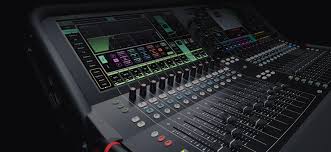
I've been behind the Avantis for about two years now and it continues to impress. The sheer flexibility is something I've always wanted in a digital mixer — and something no other console in this price range comes close to matching. We purchased at 64 channels, and recent firmware updates have expanded that to 96, which tells you everything about how Allen & Heath supports their products long-term. Our current setup runs an S-Link GX4816 for our installed patch bay and a Dante expander for flexible stage placement using just two ethernet cables. The built-in FX processors are world class — the new Compstortion in particular has become my go-to for every oldies tribute band on the roster. My only wish is that we'd included a MADI card from the start, though it's available as an expansion. Great board, great shows.
The Neumann KMS 105 delivers top-of-the-line condenser mic quality with minimal handling noise and excellent off-axis rejection. I rarely need to touch EQ — and if I do it's a slight notch somewhere in the 300-500Hz range. From comedy nights to acoustic singer-songwriters, there's no better option on the market. The price is my only concern, placing it comfortably outside most people's budgets, but if you have enough gigs to justify the jump, this is the biggest quality improvement purchase you can make dollar for dollar.
The board I reach for first on a one-engineer load-in. Fast to navigate under pressure, and the preamps hold up against boards twice the price. Screen real estate gets tight past 24 channels, and the scene recall menu is buried a layer deep — but for solo FOH work, nothing in its price range beats the workflow.
The XR18 functions mostly like a portable stage box — and it's surprisingly powerful for the sub-$500 price point, though it does leave a lot to be desired. It's ideal for solo and duo acts with a couple of instruments and a couple of mics, though some small bands will get by just fine. It lacks a true subgroup for processing, but you do get 16 usable inputs, 4 FX engines, 6 aux XLR outputs in addition to the 2 XLR main outs, and 16 combo XLR inputs — even if only 2 are Hi-Z. Where it falls apart is the WiFi. The built-in signal is notoriously weak and inconsistent, and since the only way to control anything is through the iPad app, navigating away — say, to pull up lyrics — means immediately reconnecting to the mixer. That makes running your own sound during a gig genuinely difficult, which is exactly what this thing was designed for. The Midas preamps are a bright spot: crystal clear, strong enough for gain-hungry mics like the Shure SM7B, and they handle the basics really well. These days I find myself using it primarily as an audio interface, which is where it truly earns its keep. Good for the money — just don't count on it as your every-gig digital mixer.